

Medication non-adherence presents a profound challenge across European healthcare systems. Patients don’t always take their prescriptions as directed, leading to suboptimal treatment outcomes, increased hospitalisations, and significant financial strain. We understand this isn’t simply a matter of patient choice; often, it’s a complex interplay of factors, including confusing dosage instructions, difficult packaging, and forgetfulness.
The consequences are stark: reduced treatment effectiveness, preventable complications, and substantial healthcare costs. Half of patients with chronic diseases don’t take their medication as prescribed. This absenteeism costs Europe 100 billion Euros per year in unnecessary hospital admissions. Clearly, there’s an urgent need for practical, packaging-based innovations that can help patients take their medications as prescribed.
At HCPC Europe, we’re dedicated to addressing this critical issue. Our work focuses on patient-friendly and patient-centered medication packaging, turning knowledge into action to facilitate the use of packaging solutions that genuinely enhance compliance and improve patient safety outcomes. We believe packaging is not just a container, but a communication tool, which, in its direct influence, predetermines the behavior of patients and the success of treatment.
What are Patient Safety Outcomes in the Context of Packaging-Enhanced Compliance?
Patient safety outcomes, in this context, refer to measurable improvements in health and reduced harm for patients, directly influenced by their ability to adhere to medication regimens. Packaging-enhanced compliance involves designing pharmaceutical packaging to make it easier for patients to take the right dose, at the right time, for the right duration, thereby minimising medication errors and maximising treatment efficacy.
When we talk about patient safety outcomes, we’re considering a range of indicators. These can include a reduction in adverse drug events, fewer emergency room visits due to medication mismanagement, and better disease control. For us, the goal is always better outcomes for patients and healthcare systems. Adherence to prescribed medication regimens is fundamental to achieving these outcomes. As the World Health Organization (WHO) highlights, improving adherence is crucial for effectively managing chronic conditions and reducing disease burden globally, directly impacting patient safety.
Our experience working across European healthcare systems consistently shows that thoughtful packaging design can transform a patient’s interaction with their medication, moving from potential confusion to confident compliance. This isn’t just theory; it’s about practical, packaging-based innovation in a real-world healthcare context.
“Improving adherence to long-term therapies has been shown to result in better health outcomes and is a cost-effective way of improving the health of populations.”
Ensuring Medication and Patient Safety for Better Quality Healthcare
Ensuring medication and patient safety is paramount for delivering high-quality healthcare. Packaging solutions play a vital role by simplifying complex regimens, providing clear instructions, and preventing errors, directly contributing to patients taking their medications correctly. This direct influence significantly reduces the risks associated with non-adherence and improves overall treatment success.
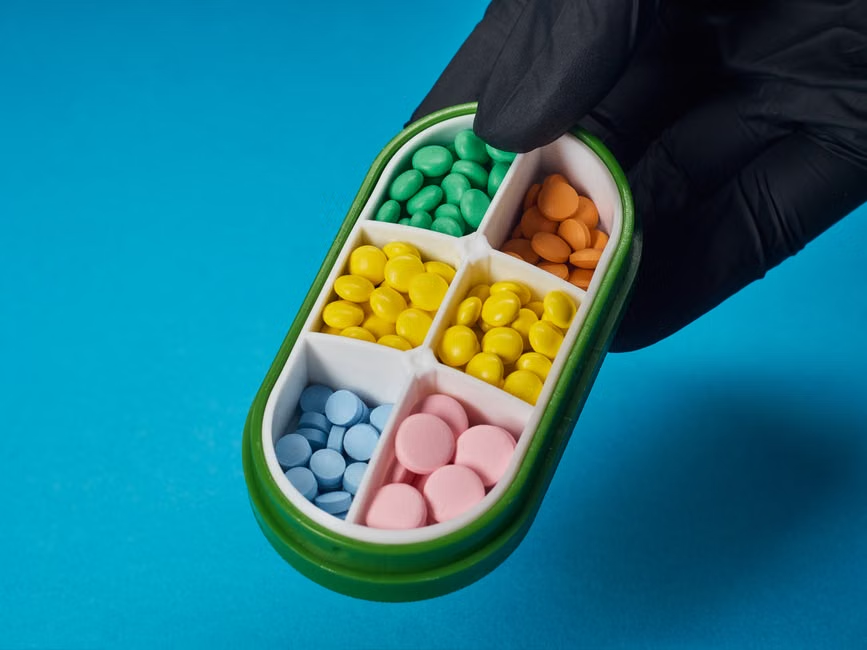
Effective medication safety strategies are multi-faceted. They encompass everything from prescribing practices to patient education. However, an often-underestimated component is the physical presentation of the medication itself. Compliance enhancing packaging design addresses common issues like confusing pill identification, forgotten doses, or accidental overdoses. For instance, features like blister packs with days of the week, clear colour-coding, or even integrated dose reminders are simple yet powerful tools.
Through our Research & Best Practices program, we’ve gathered extensive findings illustrating how these practical packaging solutions translate into tangible patient safety improvements. For example, specific data points highlight how well-designed packaging has contributed to a 25% cardiovascular risk reduction in certain patient groups, as noted by the European Society of Cardiology, or a 40% reduction in ER visits for chronic disease management.
What is Real-World Evidence for Regulatory Decision-Making?
Real-world evidence (RWE) for regulatory decision-making involves data collected outside of traditional randomised controlled trials, reflecting how medications are used in everyday clinical practice. This evidence, derived from sources like electronic health records, patient registries, and observational studies, provides crucial insights into the effectiveness and safety of packaging solutions in real-world healthcare contexts, informing regulators and policymakers.
We work to provide and promote precisely this kind of evidence. Regulatory bodies increasingly recognise the value of RWE in assessing the impact of interventions like compliance-enhancing packaging. While clinical trials establish efficacy under ideal conditions, RWE shows us what happens when patients interact with these solutions in their actual homes and lives. This includes understanding the impact of diverse demographics, co-morbidities, and varying levels of healthcare literacy on medication adherence.
Our Compliance-Focused Studies consistently demonstrate that packaging innovations yield positive real-world outcomes. For example, our collaborations and awards program, including the Columbus Award, highlight packaging designs that have led to improvements such as a 35-point mental health score improvement in patients managing complex psychiatric regimens, directly attributed to simplified dosing schedules enabled by thoughtful packaging.
Medication Safety Articles: How Does Packaging Contribute to Better Outcomes?
Medication safety articles frequently highlight packaging as a key, yet often overlooked, factor in patient adherence and safety. Packaging contributes by providing visual cues, protecting medication integrity, and facilitating easy access, all of which reduce the likelihood of errors and promote correct usage. This pragmatic approach to design turns a simple container into an active participant in the treatment process.
We’ve seen countless examples where practical packaging-based innovation has made a profound difference. Consider the ergonomic aspects of packaging: a container that’s easy to open for arthritic hands, or a dosage mechanism that’s intuitive for elderly patients. These seem like minor details, but they are critical for ensuring the right dose, the right time, and the right duration. The clarity of printing, the choice of colours for differentiation, and the portability of the pack all influence how a patient interacts with their medication.
In our practice, we have seen that when packaging is designed with the patient in mind, it acts as a silent guide. It can prevent confusion between different medications, signal when a dose has been missed, or even provide reminders. For example, the Novartis Coartem example, where packaging included pictorial instructions for use by illiterate patients in partnership with the WHO, is a powerful illustration of packaging’s potential to enhance global patient safety and adherence.

What To Look For: Signs That Packaging Can Improve Adherence and Safety
When evaluating the potential for packaging to improve patient safety outcomes, we look for specific features that address common adherence barriers. These include:
- Clear Dosage Indication: Packaging that clearly labels dosage instructions, frequency, and duration, often with pictograms or large fonts.
- Organisational Features: Blister packs organised by day or time, or multi-dose dispensers that reduce the chance of missed or double doses.
- Child-Resistant, Senior-Friendly Features: Balancing child safety with ease of access for patients with dexterity issues.
- Tamper-Evident Seals: Ensuring medication integrity and alerting patients to potential contamination or tampering.
- Portability and Discreetness: Packaging that patients can easily carry and use in public, promoting adherence without stigma.
- Integrated Reminders: Smart packaging solutions with digital reminders or colour-changing indicators.
Considering Alternatives: When Packaging Isn’t the Only Solution
While compliance enhancing packaging design offers immense potential, we recognise it’s not always the sole solution. A holistic approach to patient safety often involves a mix of interventions. For instance, for patients with complex polypharmacy, digital tools, telemonitoring, or even direct pharmacist consultations might be equally, if not more, impactful.
We believe in practical solutions, and sometimes that means acknowledging where packaging alone has limitations. Patients with severe cognitive impairments, for example, might require dedicated caregiver support alongside user-friendly packaging. Similarly, socio-economic factors influencing access to medication or understanding of health information often demand broader public health interventions. Our role at HCPC Europe involves facilitating discussions among healthcare practitioners, industry players, and policymakers to develop truly integrated strategies that address the full spectrum of patient needs. We don’t advocate for one-size-fits-all approaches; instead, we champion solutions tailored to the real-world healthcare context.
What To Expect: Realistic Outcomes and Timelines
When packaging-based innovations are effectively implemented, we anticipate significant improvements in patient safety outcomes. These aren’t overnight changes, but measurable shifts over time. You should expect to see an initial uptake in adherence rates within the first few weeks of patients using new, improved packaging. Over several months, sustained adherence can lead to clinical improvements, such as better blood pressure control for hypertensive patients or more stable blood sugar levels for diabetics.
Long-term, we expect to see reductions in hospital readmissions and emergency room visits, contributing to substantial healthcare cost savings. Data collected through our Research & Best Practices program indicates that these benefits become increasingly evident over 6-12 months. This realistic timeline underscores the importance of consistent, patient-centered design and ongoing evaluation. Renato Lemay, a contributor to our insights, often stresses that consistency is key to realising these long-term benefits in patient care.
“Medication non-adherence remains a persistent problem across chronic diseases, leading to worse patient outcomes and increased healthcare costs. Simple, intuitive packaging solutions can be powerful tools in mitigating these issues, showing measurable improvements in adherence within months.”
Practical Tips for Implementing Packaging-Enhanced Compliance
Facilitating the use of packaging solutions requires a strategic approach. Here are some practical tips derived from our experience with industry leaders and award winners through our long-running Columbus Award program:
- Prioritise Patient Feedback: Involve patients and caregivers in the design process to ensure packaging truly meets their needs and addresses their pain points.
- Leverage Visual Communication: Use clear colours, distinct shapes, and intuitive pictograms to convey information quickly and effectively, especially for multilingual populations.
- Integrate Technology Smartly: Explore options like QR codes leading to instructional videos or NFC tags for digital adherence tracking, but ensure they remain user-friendly.
- Focus on Ergonomics: Design packaging that is easy to open, handle, and store, considering the varying physical capabilities of patients, from children to the elderly.
- Collaborate Across the Supply Chain: Work with manufacturers, distributors, and pharmacists to ensure that compliance-enhancing packaging is consistently deployed and supported.
- Educate Healthcare Providers: Empower doctors and pharmacists to recommend and explain the benefits of specific packaging designs to their patients, reinforcing the adherence message.
The journey towards optimal patient safety outcomes is a continuous one. By focusing on practical, packaging-based innovation, we can significantly improve medication compliance and adherence. Our collaborative efforts across the European healthcare landscape, championed by organisations like HCPC Europe, are essential in driving these positive changes, ensuring that every patient receives the full benefit of their prescribed treatment. Better outcomes for patients and healthcare systems are within reach when we embrace packaging as a vital communication tool.