

The journey of medication from manufacturer to patient is complex, fraught with potential vulnerabilities. Patients need to be certain that the medication they receive is exactly what was intended, untainted and unaltered. This isn’t just a matter of peace of mind; it’s fundamental to patient safety and the effectiveness of treatment regimes. When patients doubt the integrity of their pharmaceuticals, it can severely impact their willingness to comply with prescribed doses, undermining health outcomes.
Ensuring medication integrity directly influences patient adherence – the right dose, the right time, the right duration. If trust is compromised, so is compliance. This is where robust packaging solutions become paramount, acting as a crucial barrier and communication tool. At HCPC Europe, we understand that packaging is not just a container; it’s a vital component in helping patients take their medications as prescribed.
Our focus on practical, packaging-based innovation aims to address these concerns head-on. As we often discuss in our work on enhancing medication adherence, packaging choices, such as color-coded medication packaging, play a significant role in patient education and trust.
What is the purpose of tamper-evident packaging?
The primary purpose of tamper-evident packaging is to visibly indicate if a product has been opened or compromised before use, alerting the patient or healthcare provider to potential tampering. It’s designed not to prevent tampering entirely, but to make any interference obvious, thereby safeguarding the integrity of the medication and fostering patient trust.
Tamper-evident packaging provides a visible signal that an external party may have interfered with the product. This overt indication is critical in pharmaceutical applications, where the purity and exact composition of a drug are paramount. Without such a mechanism, a patient might unknowingly consume a product that has been contaminated, diluted, or replaced, leading to ineffective treatment or serious health risks. The FDA defines tamper-evident packaging as having “an indicator or barrier to entry which, if breached or missing, can reasonably be expected to provide visible evidence to consumers that tampering has occurred.” (FDA Guidance for Industry).
What is an example of tamper-evident packaging?
A common example of tamper-evident packaging is the induction seal on a bottle of tablets, which adheres to the bottle’s rim and must be peeled away, leaving a clear residue or tearing, to access the contents. Another example is a blister pack, where each individual dose is sealed separately, making it evident if any single dose has been removed.
Beyond induction seals and blister packs, other examples include shrink bands around bottle caps that break when twisted, foil seals on ointment tubes, and security labels or seals that tear or leave a “void” message upon removal. These methods aren’t just for over-the-counter drugs; they’re integral to prescription medications too. For instance, many liquid medications come with a cap that has a plastic ring that detaches from the main cap when first opened. This mechanism assures the patient that the bottle hasn’t been opened since it left the pharmacy or factory.
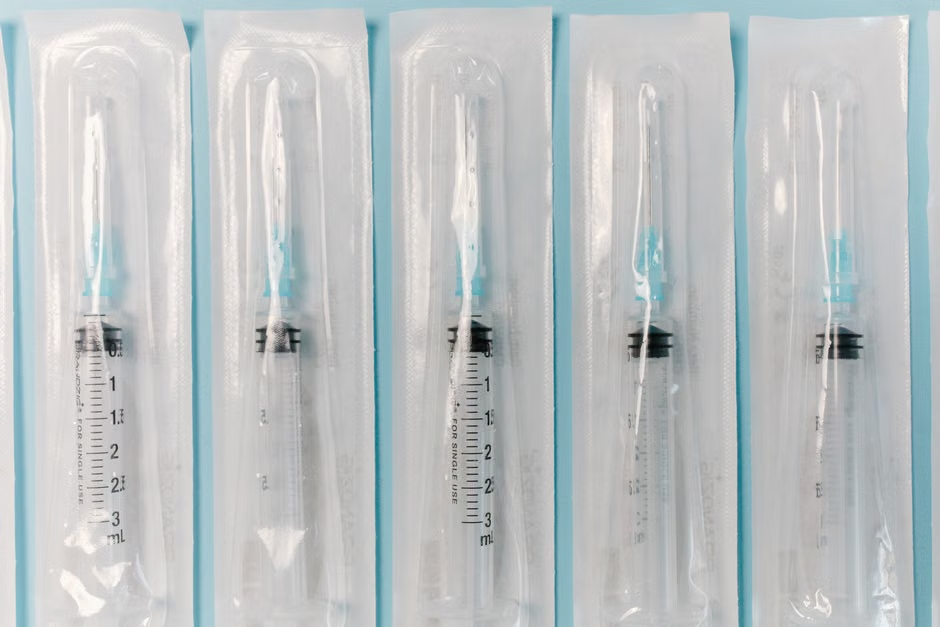
Tamper-evident packaging pharmaceutical
In the pharmaceutical sector, tamper-evident packaging is a non-negotiable safety feature, mandated by regulatory bodies to protect patients from counterfeiting, intentional contamination, and accidental product alteration. It’s a cornerstone of patient safety outcomes, ensuring that what’s inside the package is precisely what was manufactured and prescribed.
The importance of tamper-evident packaging in pharmaceuticals cannot be overstated. It directly contributes to the efficacy of treatment and protects patient health. Consider the tragic example of the Tylenol tampering incidents in the 1980s, which led to widespread reforms and the mandatory adoption of tamper-evident features for many over-the-counter medications in the United States. In Europe, while regulations vary, the emphasis on product integrity and patient safety remains consistent across national health systems. Our work at HCPC Europe, including the recognition of excellence through the Columbus Award, often highlights innovations in this critical area, showcasing how pharmaceutical manufacturers continually improve packaging design to enhance safety and trust.
“Effective tamper-evident packaging is a silent guardian, empowering patients with the confidence that their prescribed medication is safe and genuine. It transforms a simple container into a crucial component of patient trust and adherence, which is vital for positive health outcomes.”
What is the purpose of tamper-resistant packaging?
While often used interchangeably with “tamper-evident,” tamper-resistant packaging focuses on making it difficult to open or tamper with the product, providing a physical barrier against interference. Its purpose is to deter tampering through design, whereas tamper-evident features primarily aim to expose tampering once it occurs.
Tamper-resistant designs typically incorporate stronger materials, complex closures, or seals that require specific tools or significant effort to bypass without leaving a trace. For instance, child-resistant caps are a form of tamper-resistant packaging, designed to prevent young children from opening medication bottles. While they primarily serve a child safety function, they also inherently offer a degree of tamper resistance. In practice, the most effective pharmaceutical packaging often combines both tamper-evident and tamper-resistant features to offer comprehensive protection.
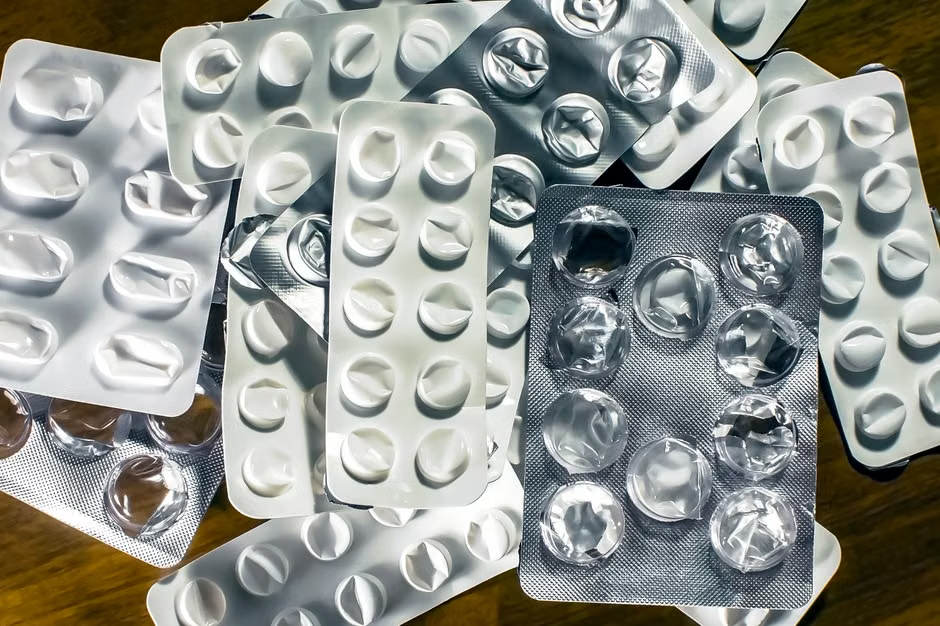
How Tamper-Evident Packaging Works to Build Trust
The mechanism behind tamper-evident packaging is straightforward: it relies on a visual or tactile change that occurs upon unauthorized access. This change is irreversible and immediately noticeable. From a psychological perspective, this transparency builds trust. Patients feel more secure knowing that any attempt to interfere with their medication would be overtly visible, prompting them not to use it.
In our practice, we have seen that patient-friendly and patient-centered medication packaging is not just about ease of use, but also about the clear communication of safety. When a patient can easily verify that their medication is sealed, it removes a layer of anxiety. This is particularly crucial for chronic conditions where adherence is a long-term commitment. The consistent visual reassurance provided by tamper-evident features reinforces a patient’s confidence in their treatment plan. Moreover, this trust extends to the entire healthcare ecosystem, including pharmacists and prescribers, who rely on packaging integrity to ensure the quality of care they deliver. When discussing pre-filled vs. multi-compartment blister packs, we often emphasize how both formats, when properly sealed, contribute significantly to this foundation of trust.
What to Look For: Key Features of Secure Packaging
Identifying truly secure pharmaceutical packaging involves understanding several key design elements. These features work in concert to protect the product and signal its integrity.
- Clear Visual Seals: Look for seals, bands, or labels that must be broken or visibly altered to open the package.
- Integrated Packaging Elements: Blister packs or unit-dose packaging where each dose is individually sealed and removal causes an obvious tear.
- Unique Security Features: Holograms, special inks, or watermarks that are difficult to counterfeit and show clear signs of alteration if tampered with.
- Shrink Wraps/Bands: Plastic films that conform tightly to the product and must be torn or cut to open.
- Peel-Off Seals: Adhered foil or plastic seals over bottle openings that leave a residue or tear upon removal.
- Specific Opening Instructions: Packaging that requires a particular action (e.g., “press down and turn”) which also often integrates tamper-evident features.
The integrity of these features is paramount for patient safety. Any deviation from the original appearance should raise an immediate red flag.
Choosing the Right Packaging: A Nuanced Approach
While tamper-evident features are essential, they are just one aspect of effective pharmaceutical packaging. A holistic approach considers various patient needs and real-world healthcare contexts. For example, while a robust seal protects against tampering, it must also be accessible for patients with dexterity issues. Overly complex tamper-evident designs can inadvertently become barriers to adherence, especially for elderly patients or those with conditions affecting fine motor skills. This is why we advocate for patient-centered design, where safety and usability are balanced.
In some scenarios, particularly for high-risk medications, additional measures beyond standard tamper-evidence might be considered, such as tracking and tracing technologies or serialized packaging. These alternatives don’t replace tamper-evident features but augment them, providing an extra layer of security. We believe in practical, packaging-based innovation that facilitates the use of packaging solutions for all patients. It’s not about making packaging impenetrable, but about making tampering detectable and adherence achievable.
As Renato Lemay often highlights, understanding the full spectrum of packaging solutions, including those focused on adherence-enhancing features, is crucial. For instance, in our discussions around patient safety outcomes, we frequently observe that packaging designed with both tamper-evidence and ease-of-use in mind consistently yields better adherence rates and fewer adverse events.
What to Expect: Enhanced Patient Confidence and Adherence
When pharmaceutical manufacturers prioritize robust tamper-evident packaging, the most immediate and tangible result is an uplift in patient confidence. Patients become more assured that their medications are safe, authentic, and ready for use as prescribed. This increased trust directly translates into improved medication adherence. We’ve seen in various European healthcare settings that clear, unambiguous packaging helps to eliminate doubts that can otherwise lead to missed doses or discontinuation of therapy.
Data from various studies reinforce this. For instance, the European Society of Cardiology has highlighted how improved medication adherence, supported by clear and secure packaging, can lead to significant health benefits, including a 25% reduction in cardiovascular risk in relevant patient populations. This isn’t hype; it’s a measurable impact on patient outcomes. Over time, healthcare systems benefit from reduced hospital admissions and better overall public health, making the investment in superior packaging a clear win for everyone involved. The impact is seen almost immediately in patient perception and compliance, with long-term benefits accruing over months and years as adherence pathways solidify.
“Patient confidence in medication safety is a direct function of pharmaceutical packaging integrity. When packaging clearly signals its untouched status, it empowers patients to adhere to their regimens, contributing significantly to improved treatment effectiveness and reducing the substantial costs associated with non-adherence in European healthcare.”
Practical Tips for Healthcare Providers and Patients
For healthcare practitioners and patients alike, understanding how to leverage tamper-evident packaging effectively is key to ensuring medication safety and adherence. Turning knowledge into action helps everyone involved in the patient care pathway.
- Educate Patients: Always explain what tamper-evident features to look for on new medications and what a compromised package might look like.
- Inspect Before Dispensing/Using: Healthcare providers should check packaging integrity before dispensing, and patients should do so before every first use of a new package.
- Store Medications Safely: Keep medications in their original, sealed packaging until needed, and store them according to instructions to maintain packaging integrity.
- Report Concerns Immediately: If any tamper-evident feature appears compromised, do not use the medication. Report it to the pharmacist, healthcare provider, or manufacturer.
- Understand Different Types: Familiarize yourself with the various forms of tamper-evident packaging to recognize them across different products.
- Advocate for Better Design: As we emphasize in our guidance on WHO best practices for patient-centric medication packaging design, provide feedback to manufacturers and regulators on packaging effectiveness and ease of use.
By following these practical steps, we can collectively reinforce the critical role of packaging in patient trust and the broader goal of helping patients take their medications as prescribed.
The robust implementation of tamper-evident packaging is more than a regulatory requirement; it’s a foundational element for building and maintaining patient trust in the pharmaceutical supply chain. As we continue to promote patient compliance by means of practical, packaging-based innovation, HCPC Europe remains committed to fostering collaboration between healthcare, industry, and policy sectors. By focusing on packaging design that clearly signals integrity, we empower patients to take their medications confidently, leading to better outcomes for individuals and more efficient healthcare systems across Europe.